Wednesday, June 16, 2010

Blog News

Above is the Alton, IL bridge I head over each day as I drive to work. I really is a beautiful little structure!

I'm going to try somewhat of a new feature. A news feed of sorts. I am new to blogging and thus figuring out a working formula to share information effectively has proven quite the challenge. Truthfully, I am terrible at organizing things. I am constantly renaming files, folders, and completely re-organizing directories to manage all the image and documents I generate each day.

I began a new job last week and have been in somewhat of a transitional state for the past few weeks which is directly related to my relatively sparse posts. I have a few main desires for content on this blog. Organizing them within the free Blogger format has been the challenge. I haven't had much time to look but I will this weekend. Originally, I began the blog in hopes of doing some lens reviews, or at least posts of compiled info from across the web (this you have seen much of if you have been following along). The other purpose for the blog was to obviously publish/post images both as samples of lenses for demonstration but also as a creative outlet for my personal work. I have done less of the latter, partly because I am not so sure how to organize them just yet. I could have two blogs but that's a little too much for me right now. I would much rather have two streams or feeds, like pages but with continual post updates on both. Any suggestions are welcome!

So I will at least begin to update a bit more frequently even if I don't have a new lens to showcase because I am always shooting. I do general info updates and additions to posts as well which I would like to highlight so people can check out the new content. One issue with creating news posts is that I would like the images to remain viewable for the duration of the blog, but since the content will no longer be "new" after a few days, I would just assume delete that text. I think for now, I will keep a post at the top of the blog with updates and just leave images with captions as newer posts arrive. So, on to the news!

+

Blog News


String-addicted Beasts

I couldn't stand it any longer. I broke down and got a kitty. Cats just are a big stress reliever for me. When I get frustrated or worn, I look over and the little furballs are usually sound asleep or playing with some completely inane object, reminding me that, whatever it is, it just doesn't matter that much. Meet Neely. She's a rescue kitten. Here was her first weigh-in at nine weeks old.

Just under 2 lbs. Not for long. I foresee a lot of photo ops.

Tamron SP 400mm f/4 Adaptall 65B Returned from KEH Repair!


She has returned, and she brought friends! Despite a few bumps a long the way, I finally have the Tamron 400mm in beautiful, operational order. KEH was a pretty good repair service but it didn't exactly go off without a hitch (more on that later). I did manage to find the Tamron 1.4x (140f) and 2x (01f) converters for very little money in great condition so I picked those up to try. I still have my eyes peeled for a 2x (200f) version (optically superior to the 01f). I even threw this whole rig onto the GF1 for a 1600mm equivalent. While I was out playing I was accidentally asked The Girl, "hey, what's on that log?", while looking at something obscure in the viewfinder of the GF1. She said, "What are you talking about?" Then I looked up and realized, whatever it was, it wasn't visible to an unaided eye, haha! So this is pretty cool! So far results are awesome. f/4 is a bit soft to be expected and has CA but this lens doesn't cost $5000 either!

Tokina 90mm f/2.5 AT-X

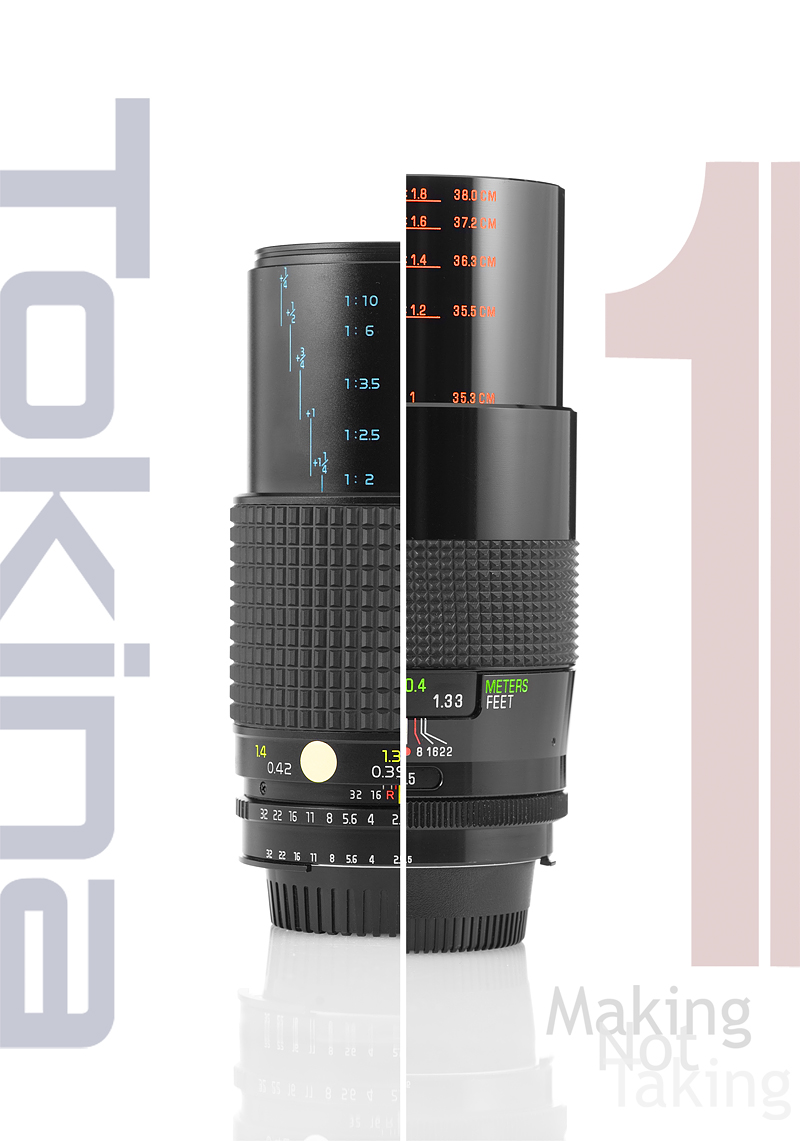
Couple things with this. I managed to pick up the Tokina macro extender (NAI mount!) and it also comes with the original AT-X Leather case and extender compartment! I'm a junkie when it comes to original accessories. Also, eBay user Malak sent me a couple images of the boxes of the Tokina 90mm and extender and I have promptly posted images. The feature slick cut-away technical drawings. Thanks to Malak!

See them HERE.

eBay Watch

A couple great items to note here:

Ends : June 21st, 2010
Malak's Pentax KA-mount Tokina 90mm f/2.5 AT-X - Rarer mount you wont find very often. I have seen Tokina 90mm of equal condition go for over $500. I have also heard of people picking them up at local garage sales for <$15 (and I am overcome with jealousy). It's an amazing lens so however you choose to get one, you won't be disappointed.

End: July 17th, 2010
Tamron SP 400mm f/4 ED-IF Adaptall 65B - I have only seen 5 of these for sale so far this year so its something of a rarer lens. It's a wonderful piece of glass. Now that I have mine in working order, I use it all the time! I think this price is a bit high, if you're interested, you should make an offer. One eBayer got an excellent deal on one of these in great condition with the bag, 1.4x and 2x TCs, boxes, and a couple other OEM accessories for $899 BIN two weeks back or so.

+ + +

That's all for now!

Saturday, June 5, 2010

6 Months with the Panasonic GF1


It has been 6 months since I first got the Panasonic GF1; Panasonic's most compact endeavor into the EVIL (Electronic Viewfinder Interchangeable Lens) cameras to date. The GF1 boasts a small, portable body, interchangeable lenses, a hot shoe for external flash or electronic viewfinder, and a full Four-Thirds sized sensor. Designed to fill a niche between the most capable point-and-shoots and entry-level DSLRs, these Micro Four-Thirds cameras represent a brand new market within the digital photographic industry. Olympus has already release two more models (EP-2 and EP-L) of their M4/3 line since their initial release of the EP-1 back in july 2009. Just a month ago (May 2010) Sony announced their foray into the EVIL cameras with their NEX-3.With all this money and effort being funneled into the EVIL cameras, photographers and enthusiasts are left wondering just how good these little cameras actually are.

After some time with the GF1, I have formed a much clearer perspective on specifically the GF1, but also some general pros and cons to the M4/3 world.

What Do You Think of the GF1?

This doesn't happen often, but my initial impressions of the M4/3 and specifically the GF1 were pretty accurate. One factor I have found, which will greatly impact how someone will receive the GF1 or another M4/3 camera is what the user currently has for equipment. I have been using prosumer cameras like the Nikon D200, D300, and D700 along some of their better optics and great macro lenses. Honestly, shooting anything after the D700 or full-frame (barring medium format digital) leaves more to be desired. I am also quite familiar with the Canon G9, G10, G11, and S90 which are a few of the better P&S on the market. It was actually the vast difference between the phenomenal ISO performance of the D700 and the comparatively poor ISO performance of the G10 (or any P&S with such a small sensor) that caused me to explore the Micro Four Thirds System as an alternative to lugging around a big DSLR all the time while still getting good low lighting images.

What I Love:
  • Under standard conditions, the GF1 is capable of beautiful images that can be easily enlarged to standard print sizes up to 8x10 and even greater.
  • The kit 20mm f/1.7 enables the user to compose with a beautifully shallow depth of field reminiscent of film and rangefinders and relatively unknown to the point-and-shoot world (though that too is changing).
  • Short flange-to-sensor distance allows for maximum adaptability. Just about any lens you can think of can be used on this thing with the right adapter, save for the most extremely intrusive lenses (such as the fisheyes from the older rangefinder systems which had a large rear protruding element, and even then, they may be usable ).
  • HD video capability demonstrates clarity and quality with the added bonus of interchangeable lenses and legacy glass (noted above) in a small package to boot.
  • Convenient, portable, and gives me full control of my image making.
What I Wish Were Different/Better:
  • At high ISO, the GF1 fairs better than a P&S but still nowhere near the better DSLRs. The Four Thirds sensor is still just too small to yield the kind of results I would like. Given the physical reality, a small sensor with small photo receptors simply will not perform as well as a larger sensor with larger photo sites, I suppose I cannot help but accept the reality that this camera is not a D700. Though I do believe technology will eventually advance to a point where even the smallest sensors can produce nearly noiseless images at high ISO.
  • TOO EXPENSIVE! The optics for these cameras are good, but not as good as optics of equal cost for DSLRs! The basic 20mm f/1.7 was retailing around $400. While Nikon's sharpest optics, the 50mm f/1.8 (roughly the equivalent focal length, 40mm, for an M4/3) retails around $100. The new 8mm fisheye is set around $800 and the 7-14mm ultra-wide rectilinear is nearly $1000. As much as I love this concept, I have a hard time with the fact that lenses for the GF1 run equal-to and more than some of my DSLR optics! Perhaps I am in the wrong mindset; I am using the GF1 as a smaller alternative or second-string device to my DSLRs. The image quality just isn't as good. So why am I paying more for less performance?
  • Lens compatibility issues. Using the correct M4/3 adapter, I can use just about any camera lens I want on this thing (awesome). However, the liveview, which is the only means to focus unless you purchase the separate $200 EVF (I have read inside the EVF isn't all that pretty either), looks dreadful when using a non-CPU lens. And even though this doesn't affect the image quality, I am noticing a considerable degradation when using adapters and lenses vs. the dedicated Panasonic optics.
  • The HD video while cool, doesn't offer me enough options. For a $900 "mini-DSLR", I want the ability to manipulate exposures and so forth in video mode. The GF1 is pretty limited in what you can change while shooting HD. Exposure and "Defocus control".
  • I didn't think focusing solely with the LCD would be an issue. But it is. Trying to make a macro of a flower on a beautiful sunny day is far more of a challenge than it needs to be. Again, this can be remedied by the EVF, but I just don't have the money right now. Plus that's one more step closer to DSLR size.
  • No audio options beyond mono recording. I would like the ability to at least add stereo.
  • AF isn't incredibly fast or extensively manipulate-able (such as numerous easily adjustable focal points or something)
Wow, that gripe list looks awfully long; it's longer than the love list...

In A Nutshell

Ultimately the GF1 is just too expensive for what it is. In some ways I feel like it is being marketed more as a gadget than an image making tool. Sure, it is more than I ever got out of my already stupidly expensive P&S. I remember having the hardest time picking out a P&S because every time I finally got close to picking something that had the options I felt I needed in a camera, it was the most expensive (usually one of Canon's G cameras) at around $500. At which point, I felt, why don't I just get a small DSLR body with still better image quality? But now I have doubled that price and still am not quite getting DSLR quality images. Maybe I just want too much. This would all be different if the GF1 (with lens) cost around $600, and lenses at most cost $400. Ridiculous perhaps but somehow it makes sense in my fantasy world of photography.

Again, this could all be tainted by the fact that I regularly shoot a D700 which, as far as I'm concerned, is just a gorgeous camera. I can make some killer images with that beast, and print them to perfectly reasonable (and absurdly unreasonable) size, and need nothing more. And the fact remains, even when technology has moved on, my "old" D700 will still be able to enable me to make the same great images, printed to the same normal, or huge sizes, to my heart's desire. An 8x10 is an 8x10. And my 20x30's look just awesome. I'm not printing billboards...yet.

Did I mention I am bipolar? Practicality aside (not all but that which was mentioned above), I find the GF1 to be an excellent tool and it does possess some strong points. It represents a great first attempt at a new type of camera. I find benefits to it all the time! People act more natural around it since it is less intimidating than a DSLR. As photography becomes more persecuted where people are more wary of who is taking pictures and why (I see this a lot in retail stores. I come in with a camera just to browse and owners/managers always want to know why the camera and who I am taking pictures for. The small GF1 is unassuming and saves me that trouble 9 times out of 10. Without the loud mirror clack, I can make images in quiet venues (Though the GF1 isn't silent, the minimal shutter noise is far less disruptive). The GF1 is a great camera and a wonderful tool to have in the kit. It just costs more than it should and given the tighter financial status of beginning photographers, I wouldn't recommend this camera as a replacement for a DSLR. Though I will say, photojournalists may find something like this an excellent sidearm due to the importance of minimizing your presence and capturing a moment in as pure a form as you can.

Other EVIL Cameras


As mentioned before, these small interchangeable lens cameras aren't going away. As of this post, Olympus and Panasonic are going the Micro Four-Thirds route. Sony is using APS-sized sensors in their NEX line. Samsung has released a brand new line starting with the NX10, which utilizes a brand new mount system and APS-sized sensor. It is rumored Nikon has something on the way too.

It is a new niche and technology will only get better. I still feel the same initial excitement over these smaller EVIL cameras, even despite the drawbacks of the GF1. A newer, better model will always be on the way. The beauty here, is that conceptually, these cameras have such potential. I don't know what it is about large gear that people find so upsetting, but it doesn't seem to be the images quality. Though, it would appear the line of thinking may be: bigger camera means more "professional" or detailed image to which the self-conscious flushes with reluctance and excuses. "Oh, stop I don't have make-up on." Side-note: I love that strange desperate yet seemingly erratic attempt to get out of the frame. Where the person ducks and bobs while awkwardly searches for the edge of the image as if it will be a physical frame which they can grab and dive out of.


Links/Resources

For a comparison of sensor sizes, see this great chart from Wikipedia.com

Thursday, June 3, 2010

A Wedding, A Mimosa Tree, and Kinley - Adventures with the Bokina


For the past two weeks, I have been carrying this Tokina 90mm f/2.5 AT-X around where ever I go in an attempt to really get a feel for how it handles on a day-to-day basis.

Just as the title suggests, it has traveled across a good range of subjects and even went to a friend's wedding. For those who are new to the blog, Ashley (Sometimes referred to as "Girl") is my girlfriend and is the redhead seen throughout these images. Megan, the Bride, is her friend from college.

The Wedding

Above image made with Nikon AF-S 17-35mm f/2.8 and corrected for perspective.

The wedding was held in a gorgeous and rustic little winery called the "Casa de Loco". It was originally a mental hospital which burned down and has since been restored. Located in the woods of the Ozarks, it sits on a precipice overlooking the Niangua River where many take float trips and cruise along on jet-skis.

Megan (The Bride) with Ashley


Ash signing the Newlywed's Platter


She has great eyes!


Mimosa Tree

Last year we planted a small mimosa tree. This year it has already doubled in size and has twice the pink fuzzy blooms to photograph. These are beautiful subjects! Almost all of these images were made at either f/2.5 or f/4.


Below is a crop from the above image.


The Little Neighborgirl - Kinley

Whenever I am outside enjoying the sun or working in the yard, I tend to acquire an audience. The neighbor kids love coming over and getting in my way, haha. This is little Kinley. She just had her bath and was ready for "beh-tie" (bedtime). She defines photogenic.


Wrap-up

The Tokina 90mm f/2.5 AT-X is an unbelievable lens. It has surpassed my love for the Vivitar Series 1 90mm due to its utility and newer better coatings. Both are equally sharp wide open but the Tokina fairs much better under every light condition I have put this thing through (strobe, sunset, bright and sunny days, etc.). The bokeh produced by this lens is aesthetic and ethereal. It is a joy to shoot with. I am actually finding I appreciate the slight weight reduction as well as the larger grip and more loose throw focus. Everything they say about this lens is true!

I have a few more images I want to post so those will be coming!

Saturday, May 29, 2010

Tokina 90mm f/2.5 AT-X Macro - The "Bokina"


More than a decade after Vivitar's release of the Series 1 90mm f/2.5, Tokina unveiled their AT-X line's macro lens (1986). According to a review written by user Tao.design on dpreview.com, Tokina denies any relation between the Vivitar S1 90mm and their AT-X 90mm. That review, by the way, is a great in-depth look at this spectacular lens. As is the case with these more popular lenses, due to a good amount of info already available, this post will attempt to serve as a hub of as much info as I can gather, my personal experience with this lens, and some detailed images!


Above, the Tokina 90mm and the Vivitar 90mm side-by-side. The size difference is only cosmetic as the Vivitar has a slightly longer barrel and thus more shaded front element.

So despite Tokina's reluctance to reveal their 90mm's true origins, it is accepted these two lenses share their optical formula. It was, after all, Tokina who manufactured the original Vivitar Series 1 90mm. Speculation that Tokina either purchased Vivitar's design (perhaps near or after their demise) or adapted it to their own, abounds. As far as records, dates, and other empirical data proving any of these allegations is sparse at best. Whatever the truth may be, it doesn't change the fact that the Tokina 90mm f/2.5 AT-X macro is one of the best macro lenses ever made.

Look and Feel


The AT-X 90mm f/2.5 is slightly smaller than the Vivitar Series 1 90mm and in a way feels as if everything in the S1 has merely been packed into a slightly smaller package. It is a dense hunk of metal and glass. The AT-X is also slightly shorter as the front element is not quite as recessed as the S1.

The ridged rubber grip pattern used in the AT-X line is the same as I found on the Tokina MF 300mm f/2.8. It's rigid and perfect for grabbing quick focus. This 90mm also has macro reproduction ratio markings on the barrel, same as the Vivitar.


One thing I appreciate about the Tokina 90mm is the small ridge near the top cut specially to accept a dedicated clip-on lens hood. These 90mm lenses definitely need it. The hood does not interfere with the front thread so you can keep a filter on the lens, the lens cap, or even flip the hood backwards for stowing in any order you want. Simple.

Just like it's Vivitar cousin, the Tokina 90mm was designed for a 1:2 macro reproduction ratio but originally came with a 3-element macro extender the brought the lens to 1:1 while correcting for aberrations. The Tokina extender lacks a rotating tripod socket like the Vivitar S1. It also does feel considerably lighter and bit less rugged. Also, it should be noted, I used the Tokina extender with the Vivitar 90mm with great results however, the Vivitar extender cannot be used with the Tokina 90mm due to a fitted metal ridge at the top of the extender (at least in terms of the Nikon AI mount lenses).

This lens originally came in a 2-part black leather cylindrical case which included a smaller, leather compartment specially crafted for the extender. The interior was a red felt. Prices on eBay as of May 2010 have been between $360-500+ USD for these sets. They truly are worth it as they are capable of phenomenal images and sharpness.


Specifications


Focal length: 90mm
Angle of View: 27°
Max. Aperture: f/2.5
Min. Aperture: f/32
Min. Focus (from film plane): 15.3" (390mm)
Filter size: 55mm
Aperture blades: 8
Elements/Groups: 8/7
Weight: 530g

Specs and MTF data can be found at Photodo.com. This lens is ranked their 4th sharpest lens ever tested.

Performance


How does the Tokina 90mm fair? I think it's safe to say by this point, you know, this lens is incredible. I really cannot say more. This lens is sharp wide open. And not consolation-sharp, tack sharp. I consistently use this lens wide open. The bokeh is just as a lens nicknamed "The Bokina" should be: beautifully soft, smooth, and aesthetic. The coatings provide great optical performance and contrast. I love the color I get from this lens. Of course there is a hint of CA wide open, ever so slightly in extreme highlights. But I honestly have no cons with this lens. If you have the chance at one, buy it. You cannot beat the performance for the prices of some of these (I say some since due to the hype, the prices have been on the rise. $550 can buy modern macros with AF and newest technology coatings).

Below is the full-frame image and then a crop at about 200% of a jumping spider made with the Tokina 90mm f/2.5 wide open. I was holding the little guy just above the grass on a bright day. ISO 200 on the D700.


>>See some samples utilizing CombineZM image-stacking software.

Tokina 90mm AT-X VS. Vivitar Series 1 90mm

If they truly are the same optical design, then is there much difference in performance? If so, which one is better/should I look to buy?

Tokina 90mm AT-X
  • Better/newer coatings - Handles flare better, performs very well even when using strobes
  • Less CA than the Vivitar S1 90mm
  • Notched for dedicated hood. User will definitely need to use the hood for optimum performance
  • Larger grip for fast and easy focusing.
Vivitar S1 90mm
  • Heavier build, more rugged design. The Vivitar is a tank and will probably take more abuse than the Tokina if you're thinking of taking it to war.
  • Macro Extender has a built-in rotating tripod collar. This is very handy for close-up work given the weight and length of this lens. It's possible the Tokina does not have this because it is a bit lighter. Both lenses can be cumbersome at 1:1.
Ultimately, I would recommend the Tokina 90mm AT-X. I prefer the ability to shoot under strobe over the cosmetic amenities of the Vivitar. Purchasing a lens is essentially purchasing a tool. The Tokina offers the more capability. Also like tools, more capability typically costs more money. The Tokina 90mm often goes for a much higher price than the Vivitar 90mm. Keep in mind though, both lenses perform extremely well relative to other macros and are very sharp wide open.

Links/Resources


eBay member, Malak, was kind enough to acquiesce to my request for images of packaging as he listed a beautiful sample on eBay. I love cut-away images. Also, if interested, the auction ends June 21, 2010 and can be found here. It's for a rare Pentax KA mount. You won't see these very often, and especially not in this type of shape.


Nesster has a cool upload of an original Tokina Ad featuring the AT-X line which included the 90mm.


Photodo.com's review with MTF

Dpreview.com's write-up of the Tokina 90mm

Some very beautiful images posted in a Chinese forum made with the Tokina 90mm.

Another Chinese forum with samples.

Short post with images of the lens and some examples from a Japanese site.

Good examples of bokeh produced by this lens in a Russian blog.

Saturday, May 22, 2010

Tamron SP 180mm f/2.5 LD-IF 63B


180mm prime lenses are somewhat of a lesser sought after focal length in this new era of digital. I presume this is because 180mm often falls within the range of more popular zooms. As far as I can tell, Nikon is still producing their AF 180mm f/2.8D ED-IF. The most recent iteration of which began production in 2006 (see Nikon Lens Serial Guide). So although the focal length has not been abandoned, users are a smaller segment. I find I often go to my Nikon AF 80-200mm f/2.8D simply because it's so convenient. Reviews indicate the Nikon 180mm is superior to the zoom though I have not personally ever used the 180mm.

Nevertheless, 180mm lenses are very popular amongst the manual focus enthusiasts. More discussion on the various 180mm primes of the past can be found on the Manual Focus Lenses Forum.


The Tamron SP 180mm f/2.5 LD-IF is pretty well sought after 180mm lens. Released in 1988 as a special edition lens, it marked the 35th anniversary of the Tamron company. It is an adaptall-2 lens and thus can be used on a wide variety of cameras. The LD suffix signifies that the lens utilizes low-dispersion glass providing optimal apochromatic performance. IF means the lens is an internal focus; It does not physically extend when focused. The small blurb on Adaptall-2's site states the 180mm uses a "spherical aberration compensator group" to improve performance even close-up. Put simply, this lens was stacked with Tamron's best offerings for that time and was meant for use by serious photographers.

Along with premier specs, another factor could be involved in the intrigue of this lens; Only 3000 were ever made. Everything I have read about the Tamron SP 180mm f/2.5 LD-IF has been very positive, and the debate between whether it is "better" than the Nikon 180mm is ongoing (this argument of course, can become quite subjective).

Specifications


Lens Model 63B
Focal Length 180mm
Aperture Range f/2.5 — 32, AE
Angle of View 13°
Optical Construction
(Groups / Elements)
7 / 10
Min. Focus from Film Plane 47.2" (1.2m)
Macro Mag. Ratio —
Filter Size 77mm
Diameter 3.2" (81.5mm)
Length at
[w/Nikon mount]
4.7" (119.5mm)
[4.9" (124mm)]
Weight 28.2 oz. (800g)
Lens Hood Bayonet type #73FH, reversible.

Specs from Adaptall-2.com

Tamron SP 180mm f/2.5 LD-IF Optics Diagram


Physical/Cosmetic

Like the Tamron SP 300mm f/2.8 and 400mm f/4, this lens boasts adurable, pro-quality build. An all-metal construction has ensured the relatively small number of units produced, remain intact for many years to come. I have said this before and I will say it again, I still think the adaptall concept is an excellent, practical approach to third-party lenses. Though some may criticize Tamron's execution of the idea, I find those shortcomings easily overlooked by the sheer utility these lenses provide.


The benefit of a prime 180mm is a more compact lens than a comparably fast zoom that covers a similar focal length. Although this lens may be more a bit more compact, it is still a heavy lens! It originally was marketed with a large bayonet hood and will accept the Tamron 01F 2x and 140F 1.4x teleconverters. I also received a Tamron brown leather bag that may have originally been marketed with this lens.


Performance


I have much more shooting to do with this lens before I officially pass judgment. My initial results indicated the lens performs well wide open regarding sharpness and has minor CA. Wide open it is a bit soft, but is very sharp by f/5.6. Below are just a couple test shots I made.


And here are a couple closer crops of near the center at the above apertures:


This was a quick test done with a tripod and using ambient light. Though it was not a thorough or elaborate test, it does prove a good first demo to preview performance.

More To Come

I love the image quality that comes out of this SP glass. So far I can see some minor CA is evident in the early apertures, f/2.5 and f/4 (not very visible in a test like this). But even the CA I have seen so far is really negligible. At f/2.5, I am confident to say this lens is a bit soft. It is however, a softness beautifully applicable to ethereal environmental portraits. Though my experience with this lens is limited at this point, I can really forsee some wonderful portraits being made at f/2.5. Contrast of this lens looks great! The coatings and ED elements really bump this lens into the Pro realm in terms of contrast. I have not photographed with this lens outside to a wide extent yet, and did not get a hood with my copy so just how well this lens handles flare is still a toss up. I suspect I will at least need a good substitute for the hood (Finding the original #73FH is probably going to take a lot of patience!) because the large, prominent front element is bound to have some issues with stray light.

One thing I am sure of, the Tamron SP 180mm f/2.5 LD-IF 63B promises to be a reliable, well-built, beautiful piece of optical equipment reminiscent of a beautiful era of photography. Like it's sibling SP Adaptall-2 pro lenses, the 180mm possesses well-engineered optics within a precision-made robust exterior. I love just holding lens in my hand.

Links/Resources

A quick search on this lens brought up a thread on Photo.net in which user, Roland Larson posted the pages below. The first page is from the UK publication camera weekly and the second image is from Modern Photography.


Many of my initial thoughts on the capabilities of this lens are assured in these two articles. I am surprised to read the Tamron actually sold for a higher price than the Nikon in its day. Since I have not used the Nikon, I would be interested to do a side-by-side.

As always, you can find some great info on this adaptall lens here: Tamron SP 180mm f/2.5 LD-IF 63B at Adaptall-2.com

Thursday, May 13, 2010

Tokina-Special 135mm f/2.8 - The Tokina-Special Line


I hopped on eBay to check something and...well...so maybe I took a look around. Before I knew it, a whopping $15 was exiting my paypal account! I even sort of forgot I picked this up until it arrived on my doorstep. Funny how that works because it practically teleported to my house (maybe a whole 2 days?!). Somehow this type of shipping doesn't often occur on the purchases I care most about. It not only feels so much longer but inevitably a weekend or holiday adds a few days!

Anyway, the lens shows up and I know nothing about what exactly this lens is. Complete impulse buy. So I begin searching the web and finding my compatriots, "I got this lens for $10", "Picked this up for $15 at a local shop", "Who makes this Tokina-special?", "Anyone know if it's any good?" All stories and questions I can relate to! Not ironically, the Tokina-Special 135mm isn't anything 'special' as the name suggests, at least not these days, but it can produce some pleasant results; and it can do this at a price that is unmatched. Furthermore, the lens offered me a chance at some valuable fix-it experience.

When I got the Tokina-Special 135mm, it turns out it was not working correctly. Fortunately, the repair was extremely simple! (If it had been complicated, the lens would be broken. I know very little about fixing lenses. Who knows, there's still time for this lens to break.)

Specifications:


Focal Length: 135mm
Max. Aperture: f/2.8
Min. Aperture: f/22 Min. Focusing Distance (from sensor): 70" (1.77m)
Aperture: 6 blades

Physical/Cosmetics

The Tokina-Special 135mm had good solid feel to it. Standard metal construction common at the time of production. It bears very similar resemblance to the Vivitar 135mm f/2.8 made by Komine (not the close-focus version) and could possibly itself be Komine-made but I have no evidence of this currently. Because this Tokina-Special line of optics has relatively lower production quality than say, a "Pro" line, I think it very feasible many of these lenses can be found under various other brand names.


Performance

I will just say right now, this is no sleeper. You will not be blown away by the performance nor would it be wise to invest any real money in these lenses in hopes you will turn a profit. They are often practically given away. I have read of a few other Tokina-Special lenses, the 75-150mm f/3.8, 28mm f/2.8, and even a 200mm f/3.5 but none appear to be touted by their owners as great pieces of glass. In fact, there appears to be an overall air of disappointment with the 28mm. The biggest issues being flare and contrast, which wouldn't be as much of an issue for a more telephoto focal length such as a 135mm. I haven't used this lens much in varying conditions but did a quick test in the yard to demonstrate what you can expect out of something like this.

Center Crops


f/2.8


f/5.6


f/11


I have read some issues with CA in the Tokina-Special lenses. I can just see some blue within the mulch but I haven't put it through much. I have noticed a significant loss of contrast at f/2.8 near the center as well as some considerable light fall-off. Lens is soft wide open but depending on the application, this may or may not be an issue. Bokeh and color rendition is nothing especially great or poor.

Wrap-up

I mainly did this review since I didn't see much on the web about this particular lens and felt I may be able to shed some on light for others who may run into a great buy with this lens. The value to be had with this optic lies within the bargain and experiential realm. The Tokina-Special provides an inexpensive introduction to the (shrinking) 135mm focal length. The build will last and the optics are capable of some atmospheric images. For a walk around lens, I love the feel of the softness at f/2.8 with the vignetted corners. I also enjoy the feel of a manual focus lens. Much better lenses exist in 135mm but for <$20, you really can't do much these days!

Sunday, May 2, 2010

Seadragon - A New Way to Pixel Peep


After this talking about macro comparisons in this last post, I began thinking about taking another look at the Tokina in relation to my other favorite macros, the Vivitar Series 1 90mm f/2.5 and the Lester A. Dine 105mm f/2.8. I was curious how they might render the same situation differently. A realistic situation rather than a flat dollar or test. In searching for a good way to effectively embed some means by which you as a reader can quickly view results, I found Seadragon.

I first heard about this type of technology through a TED talk (which are awesome by the way!). If you are unfamiliar with these, they are a collection of presentations by the most brilliant and charismatic minds of our time. Anyway, some of the potential uses for this Seadragon technology are quick viewing and rendering of high volumes of image content with maximized zoom capability. The demo shows the guys viewing all the images on a hard drive at once, then quickly zooming into a specific image, all the way down to the pixels; all this was done quickly and fluidly.

The spider at the top is a quick sample geared towards drawing you in and obviously demonstrating the technology. Also, it was probably a quicker upload than a more busy scene. Did it work?

Now for the more practical application, pixel peeping. Currently I have yet to determine the exact parameters since I have just discovered it and not read much into it. Why am I already writing about it if I don't know all that much? Well, because it is exciting! So while I learn some more about it, have a look at this:

Vivitar Series 1 90mm f/2.5 "Bokina"


You can utilize the navigation tools near the lower right corner, or if on a mac laptop, you can simply put two fingers down on the track pad and smoothly cruise across the image, zoom in and out, without even "lifting a finger"!

How To Do It

The process is surpisingly simple. To do this all you need to do is:

1. Upload a high resolution image (doesn't have to be high res but there's not much need for this tool unless there is a lot of content to zoom into).

2. Have images hosted at some specific URL. I quickly created a free account with PicturePush.com. After uploading, PicturePush gives you the URL to share as well as other codes for embedding, etc. I clicked 'full' to view the image at full size before copying the URL to Seadragon's site. I didn't check if this makes a difference yet.


3. Go to http://seadragon.com/ and enter your URL. Click 'Create'.

4. Now you can use the embedding code given to post elsewhere!

For the comparison's sake, here are the three renderings:

Tokina 100mm f/2.8 AT-X Pro


Lester A. Dine 105mm f/2.8 (Kiron)


I'm still working on perfecting the application and understanding all the quirks about the system, but it's a start! Anyway, I thought it a great thing to share!